
Dog Training: 10 Basics That Actually Work
 By Christiaan Joubert · Published 1 August 2026 · 8 min read
Dog training has an image problem. It sounds like a draughty hall on a Tuesday night, a clicker, and a whistle you will lose within a week. In reality, the dog training that changes your daily life happens in five-minute bursts in your kitchen, on the pavement outside your front door, and in the thirty seconds before you clip on a lead. At Pawtel we work with trainers, sitters, groomers, and vets every day, and the owners who get the best results are almost never the strictest. They are the most consistent.
Below are ten dog training basics, in roughly the order most owners need them. Work through them and you will have a dog who sits, comes back, waits at the kerb, and walks without towing you down the street. None of it requires talent, and none of it requires an hour a day.
Quick answer: what good dog training looks like
Effective dog training is short, frequent, and reward-based. Five minutes a day beats an hour at the weekend. Teach a marker word first, then add one behaviour at a time: sit, recall, stay, and loose lead walking. Reward generously at the start, practise in new places, and call a professional for fear or aggression.
What this guide covers
How the main dog training approaches compare
Before the dog training basics, it helps to know what your options are. Most owners end up combining the first two rows, and there is no shame in any of them.
| Dog training approach | Typical cost | Pros | Cons | Best for |
|---|---|---|---|---|
| At home, reward-based | Free | Daily, flexible, builds your bond | Easy to be inconsistent | Every dog, every day |
| Group class | Low to medium | Structure, socialising, expert eyes | Busy rooms distract some dogs | Puppies and first-time owners |
| One-to-one trainer | Medium to high | Tailored, fast progress | Costs more per hour | Specific problems, nervous dogs |
| Veterinary behaviourist | High | Medical and behavioural together | Referral often needed | Fear, aggression, severe anxiety |
| Board and train | Very high | Intensive, hands-off for you | Skills may not transfer home | Rarely the first choice |
1. Start dog training on day one
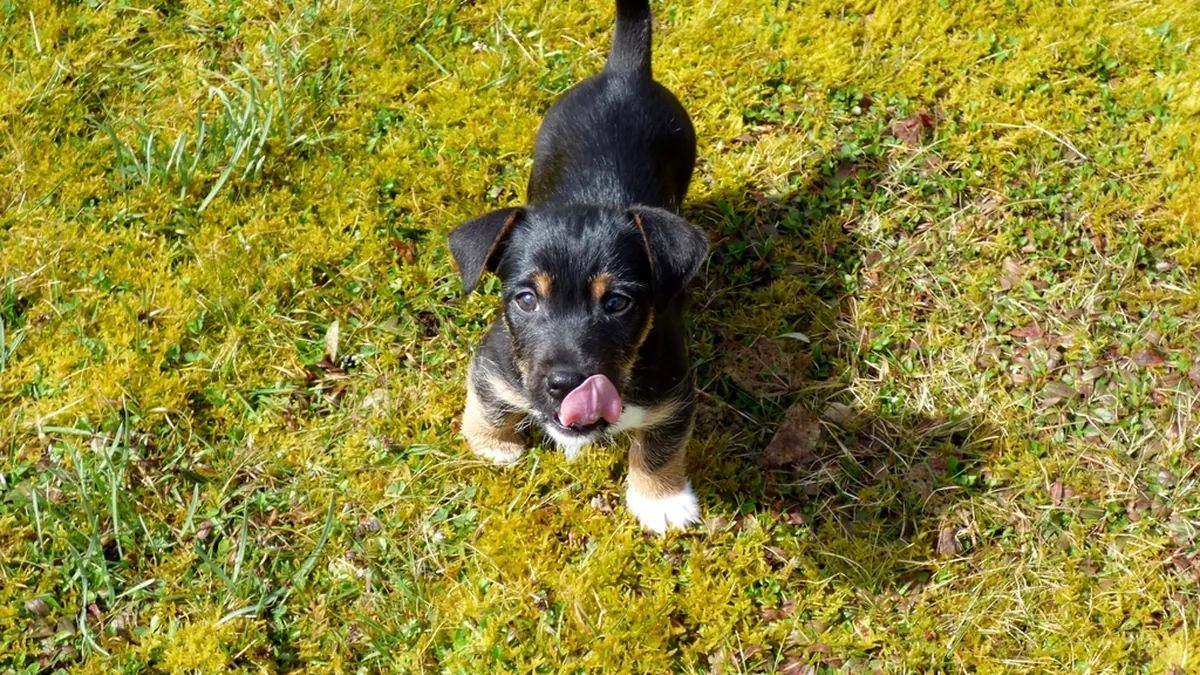
Your dog starts learning the moment they walk through the door, whether or not you have decided to teach them. Every time jumping up earns attention, or barking makes the door open, a lesson lands. Starting deliberate dog training just means you choose what gets learned. Puppies can pick up their name, sit, and a toilet routine from eight weeks, and the socialisation window up to roughly sixteen weeks is the single best time to introduce new people, surfaces, and sounds. Older dogs learn every bit as well; they simply arrive with habits already in place.
2. Pick a reward your dog will actually work for
A reward is only a reward if the dog thinks so. Dry kibble in the kitchen is fine; dry kibble in a park full of squirrels is an insult. Keep a range: everyday treats for easy work at home, and something outrageous like chicken or cheese for hard dog training work outdoors. Cut them small, roughly pea-sized, so you can pay twenty times in a session without ruining dinner. Some dogs will trade the world for a tennis ball instead, which is just as valid. If you are unsure what a healthy treat allowance looks like, our guide to choosing the best dog food covers portions and toppers.
3. Teach a marker word before anything else
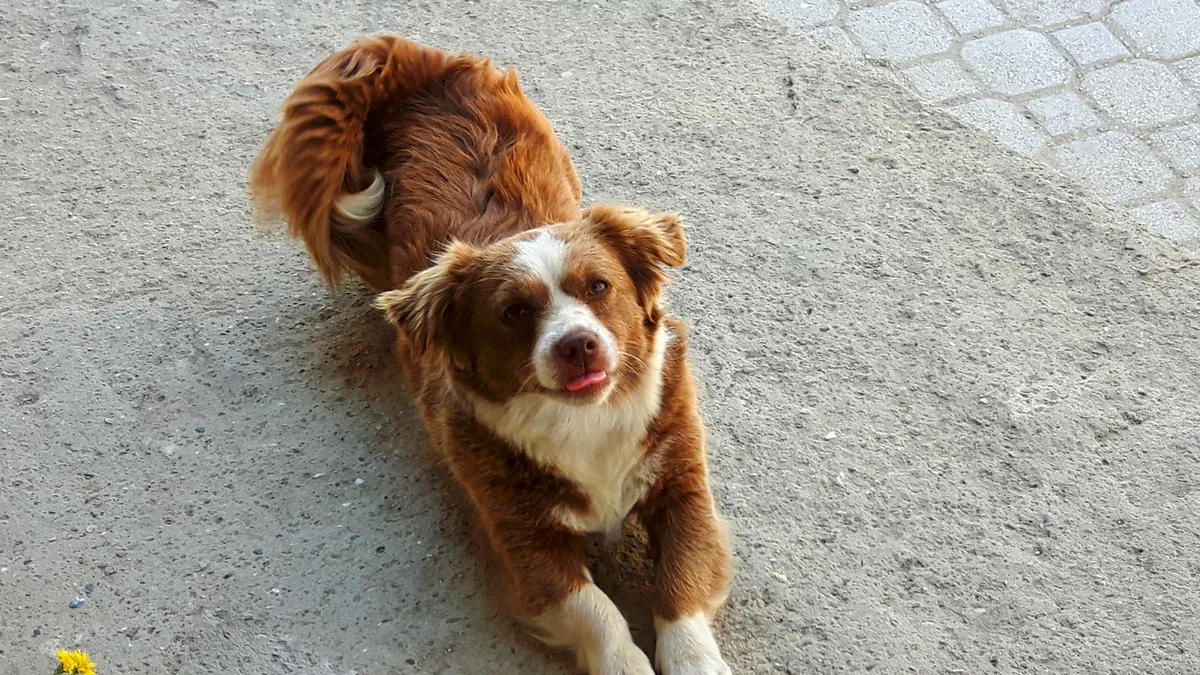
This is the piece most owners skip, and it is the one that makes every dog training session that follows faster. A marker is a short sound that means "that exact thing you just did has earned a treat". Say "yes" the instant your dog's bottom touches the floor, then deliver the food a second later. Do twenty repetitions of marker-then-treat with no behaviour required at all, and watch their head snap round when they hear it. From then on you can tell your dog precisely what you liked, which beats a vague "good boy" three seconds too late.
4. Sit: the fastest first win in dog training
Hold a treat at your dog's nose and move it slowly back over their head. The nose follows, the bottom drops, you say "yes" and pay. Do that five or six times, then try the same hand movement without food in your fingers and pay from the other hand. Only once the movement is reliable do you add the word "sit", said just before the hand signal. Saying the word fifty times while your dog stares blankly teaches them that "sit" is background noise, which is the most common dog training mistake of all.
5. Recall: the command that keeps your dog safe
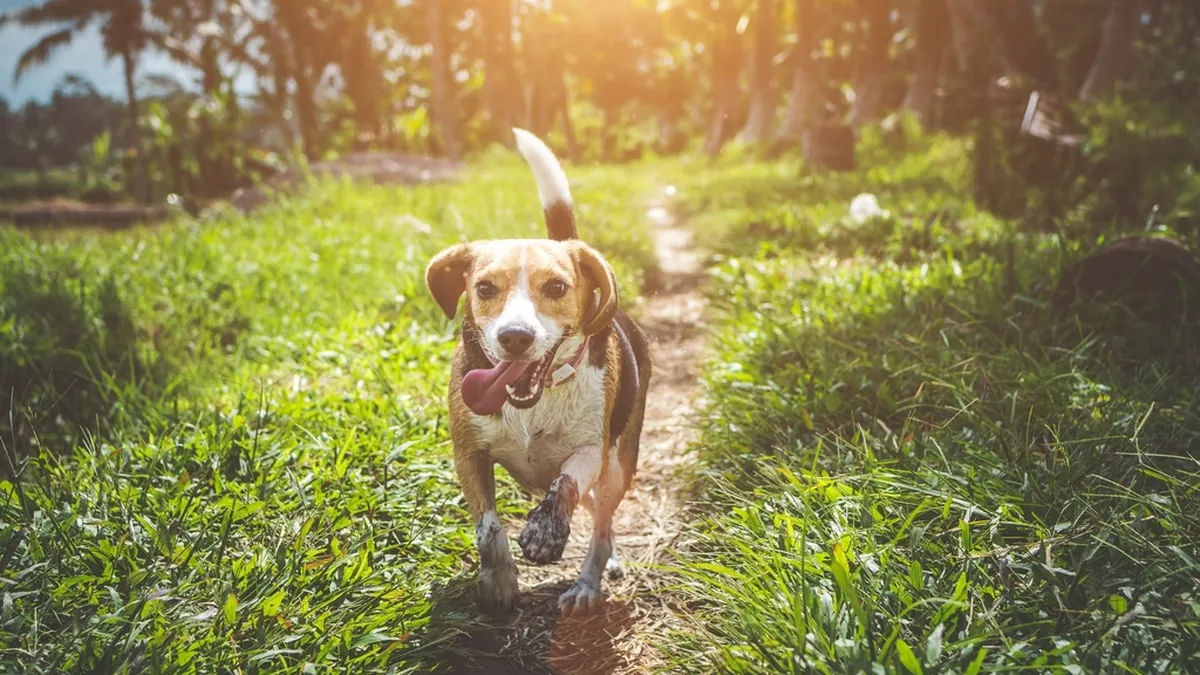
Recall is the one piece of dog training that can save your dog's life, so it deserves better rewards than everything else combined. Start indoors: say the cue once, sound delighted, and pay heavily when they arrive. Move to the garden, then a quiet park on a long line. The golden rule is that coming back must always be worth it. If you only call your dog to end the fun, clip on the lead, or tell them off for the mud, they will do the maths and stop coming. Call, reward, and release them back to play most of the time. The American Kennel Club's recall guide is a good step-by-step companion.
6. Stay and wait: teaching your dog to do nothing
Stay is not one skill, it is three: how long, how far away, and how much is going on. Build them separately. Ask for a sit, count one second, mark and pay. Then two seconds, then five. When duration is solid at your feet, take a single step back and drop the duration right down again. Then practise with the television on, then in the hallway, then at the front door. Trying to add all three at once is why most dog training stays fall apart, as the RSPCA's training advice also stresses, and a reliable wait at the kerb or the boot of the car is worth every minute.
7. Loose lead walking: how to stop the pulling
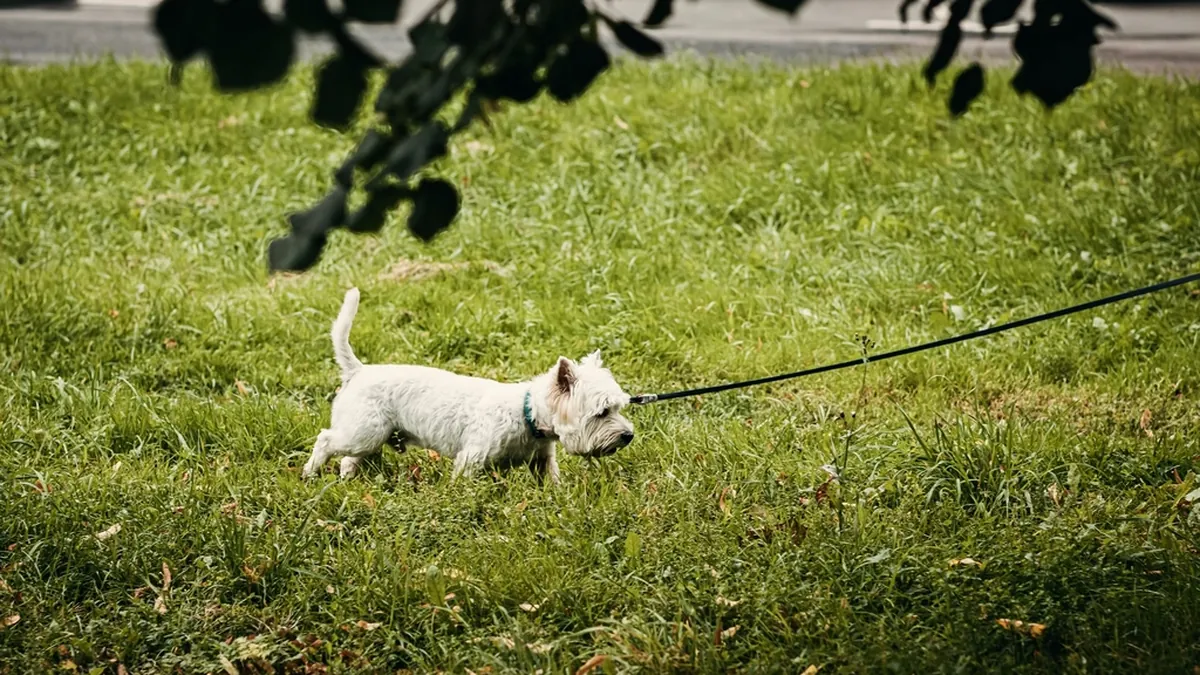
Dogs pull because pulling works: it moves them towards the interesting thing. So make it stop working. The moment the lead goes tight, stand still and become extremely boring. When the lead softens, mark, pay beside your leg, and walk on. It is slow and mildly humiliating for the first few walks, and then it clicks. A well-fitted harness with a front clip takes the strain off their neck while you teach it. Expect this piece of dog training to take weeks rather than days, especially with a dog who has spent years being towed along on a tight lead.
Dog training is easier with the right people
Find verified trainers, sitters, groomers, and vets near you, with secure in-app payments and photo updates while you are away.
8. Keep dog training sessions short and frequent
Three to five minutes is plenty for a puppy, five to ten for an adult. Two or three of those a day will outperform a single twenty-minute grind every time, because dogs consolidate in the gaps between sessions and because you both finish while still enjoying it. Stop one repetition before your dog gets bored, not one after. Fold dog training into things you already do: a sit before the food bowl goes down, a wait at the front door, a recall in the garden before breakfast.
9. Proof it: same cue, new place
A dog who sits perfectly in your kitchen genuinely does not know what "sit" means in the vet's waiting room. Dogs learn in context, so dog training has to be rebuilt in each new setting, with the difficulty dropped back down each time. Practise in the hallway, the garden, outside the shop, at a friend's house, in the park. Each new place gets easier and faster than the last, and after five or six locations most dogs make the leap on their own.
10. Know when to hire a professional dog trainer
Some things do not belong in a blog post. Growling, snapping, biting, panic when left alone, or serious reactivity to dogs and people all have an emotional cause underneath, and generic advice can make them worse. If you see any of that, or you simply feel stuck, get qualified professional dog training help involved early. Look for someone who works with reward-based methods and holds a recognised accreditation; the Association of Professional Dog Trainers maintains a public directory. For separation problems specifically, our guide to teaching a dog to stay home alone is a good place to start.
How to build a dog training plan that sticks
A dog training plan only works if it is small enough to keep. Pick one behaviour, not five. Work on it for a week in three-minute sessions, twice a day, in two or three different rooms, then add the next one while keeping the first ticking over. Write the week on a sticky note on the fridge if you live with other people, because a dog taught "off" by one person and "down" by another learns neither. And when life gets busy, Pawtel connects you with verified trainers, sitters, groomers, and vets in your area, so the routine does not collapse the week you travel. If you are a pet-care professional yourself, you can offer your services on Pawtel too.
A realistic dog training week for a new dog
Here is what a first dog training week actually looks like. Monday to Wednesday: marker word and sit, indoors only. Thursday and Friday: add recall in the garden, still rewarding every single return. Weekend: first loose lead sessions on a quiet street, plus short waits at the kerb. Next week: repeat everything one room further from where you started. That is around thirty minutes of actual dog training across seven days, which is less than most people spend deciding what to watch on a Sunday evening.
Common dog training mistakes to avoid
Repeating a cue over and over teaches your dog that the first five do not count. Rewarding late, when they have already stood up, teaches the wrong thing. Training a dog who is exhausted, overexcited, or full from dinner wastes everyone's time. And punishing a dog who finally comes back to you, however late, is the fastest way to destroy a recall you spent months building. Nearly every dog training problem traces back to one of those four.
Frequently asked questions
How do I start dog training at home?
Start with a marker word. Say "yes" the instant your dog does something right, then give a treat, and repeat until the word alone makes their ears prick. From there, teach one behaviour at a time in five-minute sessions: sit first, then recall, then stay, then loose lead walking. Dog training at home works best when it is short, frequent, and rewarding for the dog.
What is the best age to start dog training?
The day your dog comes home, whatever their age. Puppies can learn their name, sit, and toilet routines from eight weeks, and the socialisation window up to around sixteen weeks matters enormously. Older dogs learn just as well, they simply have more existing habits to work around. It is never too late to start dog training.
How long should a dog training session be?
A dog training session should run three to five minutes for a puppy and five to ten for an adult dog, two or three times a day. Short sessions keep your dog keen and end before frustration sets in. Twenty minutes of drilling is far less effective than four separate five-minute bursts spread across the day.
Do dogs respond better to treats or praise?
Most dogs work hardest for food early on, because it is clear, fast, and easy to repeat. Praise, play, and a favourite toy all work too, and some dogs prefer them. Use food to teach a new behaviour, then gradually mix in praise and life rewards such as opening the door or throwing a ball once the dog training is reliable.
When should I hire a professional dog trainer?
As soon as fear, growling, biting, or serious reactivity appears, and any time you feel out of your depth. Those behaviours usually have an emotional cause that generic advice will not fix, and early help is cheaper and kinder than late help. A qualified trainer or veterinary behaviourist can assess your dog in person.
Want a hand with the dog training, or care you can trust while you are out? Download Pawtel for iOS or Android and line up trusted local pet care in minutes.